Fire Damper In Haryana
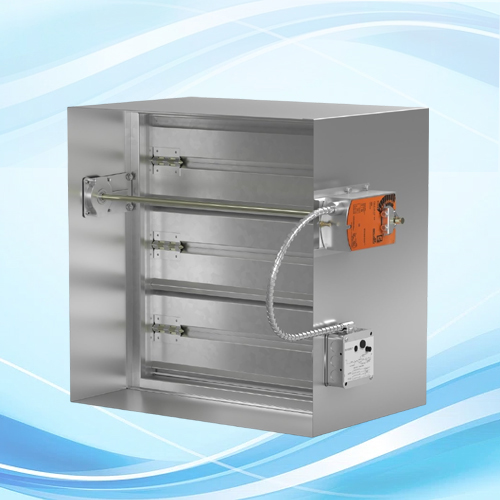
Product Overview
Fire Damper in Haryana
A fire damper is an important component of a building’s HVAC and fire-safety system. It is installed in air ducts that pass through fire-rated walls, floors, or partitions to help restrict the spread of fire through the ductwork. When selected and installed correctly, it supports the building’s overall fire-compartmentation strategy while allowing the ventilation system to operate as designed under normal conditions.
For commercial buildings, hospitals, offices, industrial facilities, hotels, and residential complexes, choosing the right Fire Damper in Haryana requires attention to duct dimensions, installation location, fire-resistance requirements, airflow needs, and the applicable project specifications. The damper should be compatible with the HVAC layout and the building’s fire-safety design rather than selected only on the basis of size or price.
What Is a Fire Damper?
A fire damper is a mechanical safety device fitted inside an air-conditioning or ventilation duct where the duct crosses a fire-rated barrier. During a fire, heat activates the specified closing mechanism, which allows the damper to close and helps prevent fire from travelling through the duct opening.
Depending on the design, a fire damper may use a fusible link or another approved thermal release mechanism. Some systems use motorized actuators and additional controls where the design requires them. The exact mechanism, installation arrangement, and permitted application depend on the product type and the relevant fire-safety requirements.
A suitable Fire Damper in Haryana should be selected according to the building’s fire strategy, duct configuration, and the requirements specified by the project consultant or fire-safety engineer.
Types of Fire Dampers
Different buildings and duct layouts may require different damper configurations. Common types include:
-
Curtain-type fire dampers: Use interconnected blades or a curtain arrangement that closes when the release mechanism activates.
-
Multi-blade fire dampers: Use multiple blades to close the duct opening. The specific design and orientation depend on the model.
-
Motorized fire dampers: Use an actuator and control system where required by the approved design. Their function and fire rating must be verified for the intended application.
-
Combined fire and smoke dampers: Designed for applications requiring both fire and smoke-control functions. They must meet the applicable requirements for the intended use.
Not every damper is suitable for every wall, floor, or duct arrangement. Product documentation and installation instructions should be checked before final selection.
Fire Damper Manufacturer in Haryana
When choosing a Fire Damper Manufacturer in Haryana, project teams should evaluate product construction, dimensional accuracy, closing mechanism, installation requirements, and documentation. A damper must fit the specified duct opening and work with the fire-rated barrier in which it is installed.
Important considerations include the casing and blade construction, operating mechanism, access for inspection, and compatibility with the ventilation system. Where a project specifies a particular fire-resistance rating or test standard, the selected product should have supporting documentation appropriate to that requirement.
A reliable manufacturing process should also consider consistent assembly, smooth operation, suitable clearances, and checks on the finished product. These factors help contractors and HVAC consultants assess whether a damper is appropriate for the intended installation.
Fire Damper Supplier in Haryana
Selecting a dependable Fire Damper Supplier in Haryana helps contractors and facility teams coordinate product requirements with their HVAC drawings, installation schedules, and site conditions. Before placing an order, buyers should confirm the required opening size, damper type, mounting orientation, operating mechanism, and applicable fire-resistance classification.
A professional Fire Damper Supplier in Haryana should be able to clarify the available product configurations and provide relevant technical information for review. This is particularly important for projects where multiple dampers must be coordinated across floors, ventilation zones, service shafts, and fire-rated partitions.
For replacement work, the existing installation should be checked carefully. A replacement damper must be suitable for the opening and intended application; matching the external dimensions alone does not establish that it is an appropriate substitute.
Key Features and Benefits of Fire Dampers
A correctly specified and installed fire damper contributes to the fire-safety design of a building. Key benefits include:
-
Fire compartmentation support: Helps restrict the spread of fire through HVAC duct openings in designated fire-rated barriers.
-
Integration with ventilation systems: Allows ducts to serve their intended ventilation function during normal operating conditions.
-
Application-specific configurations: Different sizes, mounting arrangements, and operating mechanisms may be available depending on the product range.
-
Improved maintenance access: Accessible installations make it easier for authorized personnel to inspect and test the mechanism.
-
Support for project compliance: Choosing a product with documentation appropriate to the specified application helps project teams verify design requirements.
An HVAC Fire Safety Damper should never be treated as a substitute for the building’s complete fire-protection strategy. Its effectiveness depends on the suitability of the product, the integrity of the surrounding fire-rated construction, correct installation, and ongoing maintenance.
Applications of Fire Dampers
Fire dampers may be required in a range of buildings where air ducts pass through designated fire-resistance-rated barriers. Typical applications include:
-
Commercial offices and business complexes
-
Hospitals, clinics, and healthcare facilities
-
Hotels, restaurants, and hospitality buildings
-
Shopping malls and retail developments
-
Factories, workshops, and industrial buildings
-
Residential towers and apartment complexes
-
Educational institutions and public buildings
-
Warehouses and large service facilities
For each Fire Damper in Haryana project, the required type and placement should be determined from the building drawings, applicable local requirements, and the fire-safety design. Where smoke control is also required, the project team should confirm whether a combined fire-and-smoke damper or a separate smoke-control solution is specified.
How to Select the Right Fire Damper
Before choosing a Fire Damper Manufacturer in Haryana, consider the following factors:
-
Duct dimensions: Confirm the width, height, shape, and opening arrangement.
-
Barrier construction: Identify whether the duct crosses a fire-rated wall, partition, floor, or another protected assembly.
-
Fire-resistance requirements: Verify the specified rating and the product’s suitability for that particular assembly.
-
Operating mechanism: Determine whether the design calls for a thermal release mechanism, actuator, or another approved arrangement.
-
Airflow conditions: Check the product’s documented operating limitations where the application requires them.
-
Access for maintenance: Ensure inspection and service access can be provided without compromising the fire-rated assembly.
-
Technical documentation: Review installation instructions, applicable test or certification documents, and project approval requirements.
A Fire Rated Air Duct Damper must be selected based on its documented suitability for the intended installation, rather than on the product name alone. Fire ratings and approvals are application-specific, so buyers should confirm the actual supporting documentation instead of assuming that every damper has the same performance classification.
Installation and Maintenance Considerations
Fire dampers need to be installed according to the product manufacturer’s instructions, the approved project design, and the applicable building and fire-safety requirements. Incorrect positioning, a distorted frame, unsuitable fixing methods, or obstruction of the closing mechanism can affect operation.
The installation should preserve the integrity of the fire-rated barrier and provide suitable access to the damper and its operating components. The surrounding construction and any sealing arrangement should follow the approved installation details; materials or methods should not be substituted without confirming their suitability.
Inspection and testing should be carried out by qualified personnel at the intervals required by applicable regulations, project requirements, and manufacturer guidance. Maintenance may include checking for debris, inspecting the release mechanism, testing closure where required, and recording the work performed. A Fire Damper Supplier in Haryana can help clarify product-specific information, but the building owner and responsible maintenance team should ensure that inspection and testing requirements are followed.
Frequently Asked Questions
1. What is the main purpose of a fire damper?
A fire damper helps restrict the spread of fire through HVAC duct openings that pass through designated fire-rated walls, floors, or partitions. It is one element of a building’s overall fire-compartmentation system.
2. Where should fire dampers be installed?
Their location depends on the building’s fire-safety design and the applicable requirements for duct penetrations. The HVAC drawings and fire-safety consultant’s specifications should be reviewed to determine the required positions.
3. Are fire dampers and smoke dampers the same?
No. A fire damper is primarily intended to restrict fire spread through a protected opening, while a smoke damper is designed to control smoke movement. Some applications require a combination fire-and-smoke damper.
4. What information is needed to select a fire damper?
Useful information includes duct dimensions, barrier type, mounting orientation, specified fire rating, operating mechanism, airflow conditions where relevant, and the applicable project standards.
5. Do fire dampers require regular maintenance?
Yes. Inspection and functional testing should follow the applicable requirements and the product manufacturer’s instructions. Access to the damper and its moving components is important for effective maintenance.
6. How can buyers evaluate a fire damper manufacturer?
A Fire Damper Manufacturer in Haryana should be evaluated on the suitability of its product range, technical documentation, construction quality, dimensional requirements, and ability to address project-specific specifications. Buyers should verify any claimed certifications or fire-resistance ratings against the relevant documents.
Contact Konark India Engineering
For enquiries about fire dampers and HVAC air-distribution products, contact Konark India Engineering to discuss your project requirements, duct dimensions, and technical specifications.
What Our Clients Say
Trusted by businesses across India for reliable HVAC solutions and support.
Fire Damper Available Across Locations
Common
Questions
Find answers to common questions about our HVAC products, manufacturing process, and services.
Ask a Question