Direct Expansion Coil In Himachal Pradesh
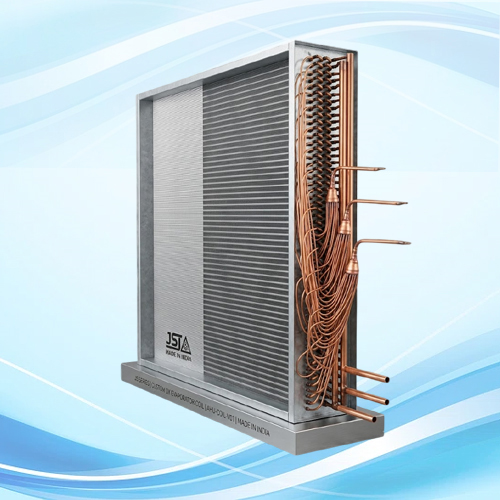
Product Overview
Direct Expansion Coil in Himachal Pradesh
A direct expansion coil is a key component in air-conditioning and refrigeration equipment. It allows refrigerant to absorb heat directly from the air passing over the coil, supporting the cooling process in commercial and industrial applications. Its performance depends on coil design, refrigerant selection, airflow, operating conditions, and the requirements of the complete HVAC system.
Konark India Engineering provides HVAC-related engineering solutions for project-specific requirements. When selecting a Direct Expansion Coil in Himachal Pradesh, buyers should evaluate the required cooling capacity, available installation space, air volume, refrigerant circuit, and operating environment. A properly matched coil can support consistent heat transfer and reliable system operation when installed and maintained according to the equipment design.
What Is a Direct Expansion Coil?
In a direct expansion system, refrigerant enters the evaporator coil through an expansion device. As the refrigerant pressure drops, it absorbs heat from the air moving across the coil and evaporates. The resulting refrigerant vapour then returns to the compressor, continuing the refrigeration cycle.
A Direct Expansion Coil in Himachal Pradesh may be required for new HVAC installations, equipment upgrades, or replacement projects. The coil must be compatible with the system’s refrigerant, design temperatures, airflow, and required cooling load. Choosing a coil based only on its dimensions or price may result in poor compatibility or inadequate performance.
The term DX Evaporator Coil is commonly used for the evaporator coil in a direct expansion refrigeration system. Depending on the application, it may be incorporated into air-handling equipment, packaged air-conditioning units, or other suitable cooling systems.
Design and Technical Considerations
The design of a direct expansion coil affects heat transfer, refrigerant distribution, airflow resistance, maintenance, and overall system compatibility. Before finalising a coil, buyers should review the following factors:
-
Cooling capacity: The coil should be selected according to the calculated cooling load and the system’s design conditions.
-
Tube and fin materials: Material selection should account for the application, operating environment, and compatibility requirements.
-
Refrigerant compatibility: The coil must be suitable for the specified refrigerant and its operating pressure and temperature range.
-
Airflow and fin spacing: Air volume, face velocity, fin arrangement, and air-side pressure drop affect heat transfer and fan requirements.
-
Circuit arrangement: Refrigerant distribution should suit the coil geometry and expected operating conditions.
-
Dimensions and connections: Overall size, mounting arrangement, pipe connections, and available service space must be verified.
-
Condensate management: Where the coil operates below the entering air’s dew point, suitable drainage provisions are important.
A Direct Expansion Coil in Himachal Pradesh should be evaluated as part of the complete cooling system rather than as an isolated component. Compressor capacity, expansion-device selection, controls, fan performance, and installation conditions all influence the final result.
Applications of Direct Expansion Coils
A Direct Expansion Coil in Himachal Pradesh may be considered for a range of cooling applications, depending on the system design and required operating conditions. Common applications include:
-
Commercial air-conditioning and comfort-cooling systems
-
Air-handling units using direct expansion refrigeration
-
Packaged air-conditioning equipment
-
Industrial process-cooling applications
-
Temperature-controlled rooms and suitable refrigeration installations
-
HVAC upgrades and replacement-coil projects
The selection process should reflect the application’s cooling load, operating schedule, indoor temperature and humidity requirements, and available installation space. In systems that require both cooling and moisture removal, the coil’s surface temperature and airflow conditions should also be considered.
A Direct Expansion Cooling System relies on the correct interaction between the evaporator, compressor, expansion device, condenser, and controls. Selecting a coil without considering these connected components can lead to performance problems or operating conditions outside the equipment manufacturer’s recommendations.
Direct Expansion Coil Manufacturer in Himachal Pradesh
When choosing a Direct Expansion Coil Manufacturer in Himachal Pradesh, buyers should prioritise technical compatibility, dimensional accuracy, material suitability, and clear communication about the intended application. These factors are especially important for replacement projects, where the existing system may have specific connection positions, coil geometry, or refrigerant-circuit requirements.
Before requesting a quotation, prepare the available technical information, including:
-
Required cooling capacity and design conditions
-
Refrigerant type and operating pressure
-
Airflow rate and entering-air temperature
-
Coil dimensions, number of rows, and fin spacing, if known
-
Tube, fin, and frame material requirements
-
Connection sizes, positions, and installation clearances
Konark India Engineering can discuss the project requirements and the information needed to evaluate a suitable coil configuration. Final product details and performance should be confirmed against the actual application rather than assumed from general specifications.
Direct Expansion Coil Supplier in Himachal Pradesh
A Direct Expansion Coil Supplier in Himachal Pradesh should be able to clarify the information required to identify a compatible product. For a replacement coil, photographs, equipment nameplates, drawings, and measurements can help establish the existing arrangement. For a new installation, the HVAC designer’s schedule and system operating data are valuable starting points.
When comparing a Direct Expansion Coil Supplier in Himachal Pradesh, consider whether the quoted configuration matches the required capacity, refrigerant, materials, connections, and installation conditions. Also confirm the scope of supply, delivery expectations, documentation, and any testing or inspection requirements applicable to the project.
For procurement teams, providing complete technical details at the enquiry stage helps reduce avoidable specification mismatches and makes it easier to compare quotations on a like-for-like basis.
Maintenance and Performance Factors
Routine maintenance supports reliable heat transfer and helps identify developing problems. Inspection should cover the coil surface, fin condition, airflow obstructions, condensate drainage, refrigerant connections, and signs of corrosion or physical damage.
For coils used in dehumidification, the drain pan and condensate drainage arrangement should remain clean and unobstructed. Cleaning procedures must suit the coil’s materials and follow the equipment manufacturer’s instructions. Bent fins, restricted airflow, incorrect refrigerant charge, or control issues can affect performance, so persistent cooling problems should be assessed systematically by a qualified technician.
Selecting a Direct Expansion Coil in Himachal Pradesh with maintenance access and system compatibility in mind can support easier servicing throughout the equipment’s operating life. Actual performance, however, depends on the complete system design, installation quality, and operating conditions.
Frequently Asked Questions
1. What does a direct expansion coil do?
It absorbs heat from air as refrigerant evaporates inside the coil. The refrigerant then returns to the compressor to continue the refrigeration cycle.
2. Is a DX evaporator coil the same as a direct expansion coil?
In HVAC applications, the terms are commonly used for the evaporator coil in which refrigerant expands and absorbs heat directly from the air. The exact configuration depends on the equipment and application.
3. How is the correct coil capacity determined?
Selection requires the calculated cooling load, entering-air conditions, airflow, refrigerant, evaporating conditions, and compatibility with the compressor and expansion device. A qualified designer or equipment specialist should verify the selection.
4. Can a direct expansion coil be customised?
Dimensions, materials, circuiting, and connections may vary by application. Customisation should be confirmed against the manufacturer’s available design capabilities and the project’s technical requirements.
5. What information should I provide when requesting a quotation?
Share the required capacity, refrigerant type, operating conditions, airflow, coil dimensions, connection details, equipment model, and any available drawings or photographs.
6. How can I enquire about a direct expansion coil in Himachal Pradesh?
Contact Konark India Engineering with your application details and available technical specifications. This helps establish the requirements that need to be checked before a suitable configuration is confirmed.
What Our Clients Say
Trusted by businesses across India for reliable HVAC solutions and support.
Direct Expansion Coil Available Across Locations
Common
Questions
Find answers to common questions about our HVAC products, manufacturing process, and services.
Ask a Question