Aluminum Air Diffuser In Tamil Nadu
Product Overview
Aluminum Air Diffuser in Tamil Nadu
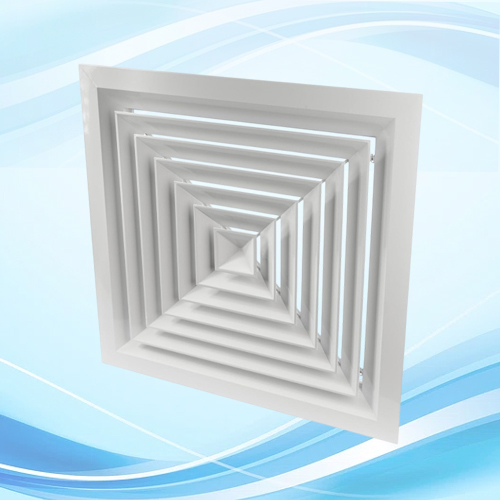
An aluminum air diffuser is an HVAC air-distribution component designed to deliver conditioned air into an indoor space and distribute it across the occupied area. Installed commonly in ceilings and duct-connected openings, it helps direct airflow while providing a clean, finished appearance. The diffuser’s design influences air distribution, pressure drop, noise, and the comfort of people using the space.
Konark India Engineering provides HVAC-related engineering solutions for commercial and industrial applications. When selecting an Aluminum Air Diffuser in Tamil Nadu, buyers should consider the required airflow, ceiling type, room dimensions, diffuser configuration, mounting arrangement, and finish. The right selection should match the HVAC design and the specific needs of the building.
What Is an Aluminum Air Diffuser?
An aluminum air diffuser is fitted at the end of an air-supply duct or opening to distribute conditioned air into a room. Depending on its design, it may discharge air in multiple directions, support a defined airflow pattern, or provide a directional supply arrangement.
An Aluminum Air Diffuser in Tamil Nadu may be used in new HVAC installations, building renovations, and replacement projects. Its size and configuration should be selected according to the airflow volume, room layout, ceiling height, and required air-distribution pattern.
An Aluminum HVAC Air Diffuser is generally selected as part of a complete air-distribution system. Its performance depends on the diffuser geometry, airflow rate, mounting position, duct conditions, and interaction with other HVAC components. A diffuser that is too small or incorrectly positioned may create excessive air velocity, uneven distribution, or unwanted noise.
Types of Aluminum Air Diffusers
Different diffuser configurations are available for different ceiling arrangements and airflow requirements. The appropriate type should be confirmed against the HVAC design and the intended application.
Ceiling Air Diffusers
A Ceiling Air Diffuser is installed in a ceiling opening and distributes supply air into the room. Depending on the design, it may provide a multi-directional discharge pattern suited to offices, meeting rooms, retail areas, and other commercial interiors.
The selection should account for ceiling height, room dimensions, airflow volume, and the location of occupants. Correct positioning helps reduce the risk of uncomfortable drafts and supports more effective air distribution.
Square and Rectangular Diffusers
Square and rectangular diffusers are commonly considered for suspended ceilings and ducted air-distribution systems. Their dimensions should match the opening and the airflow requirement. The appearance, frame design, and number of discharge directions vary by model.
Round Diffusers
Round diffusers may be used where a circular opening or a particular architectural appearance is preferred. Their suitability depends on the duct arrangement, required airflow, ceiling layout, and available product design.
Directional Diffusers
Directional designs allow airflow to be delivered in a defined direction or pattern, depending on the model. These may be useful where room geometry or the position of equipment influences the air-distribution strategy.
Applications of Aluminum Air Diffusers
An Aluminum Air Diffuser in Tamil Nadu may be suitable for various commercial, institutional, residential, and industrial ventilation applications, including:
-
Offices and corporate buildings
-
Hotels and hospitality properties
-
Retail stores and showrooms
-
Hospitals and healthcare facilities, subject to design requirements
-
Educational institutions and training centres
-
Residential apartments and housing developments
-
Conference rooms and meeting spaces
-
Selected industrial HVAC installations
The correct diffuser depends on the intended use of the space and the air-distribution requirements. Specialised environments may require particular airflow patterns, filtration arrangements, pressure relationships, or hygiene provisions beyond those offered by a standard diffuser.
Aluminum Air Diffuser Manufacturer in Tamil Nadu
When evaluating an Aluminum Air Diffuser Manufacturer in Tamil Nadu, buyers should consider dimensional accuracy, material suitability, finish, mounting compatibility, and the technical requirements of the HVAC system. Clear specifications help prevent fitting problems and reduce the risk of selecting a diffuser that does not meet the required airflow performance.
Before requesting a quotation, prepare the following details wherever available:
-
Required airflow rate
-
Diffuser shape and nominal dimensions
-
Ceiling type and opening size
-
Supply-air application and desired discharge pattern
-
Installation height and room dimensions
-
Material and surface-finish requirements
-
Quantity and project-specific drawings
-
Any noise or air-distribution requirements
Konark India Engineering can discuss the project requirements and the technical details needed to evaluate a suitable diffuser configuration. Final dimensions, available designs, material details, and performance information should be confirmed before an order is finalised.
Aluminum Air Diffuser Supplier in Tamil Nadu
Choosing an Aluminum Air Diffuser Supplier in Tamil Nadu involves checking more than the product’s appearance or initial cost. Buyers should confirm that the quoted diffuser matches the required dimensions, ceiling arrangement, airflow pattern, finish, and installation method.
For new projects, provide the HVAC drawings or diffuser schedule wherever available. For replacement work, share photographs, opening measurements, existing product dimensions, and details of the connected ductwork. This information helps clarify whether the new diffuser can fit the existing opening or whether modifications may be needed.
When comparing an Aluminum Air Diffuser Supplier in Tamil Nadu, review the material, finish, dimensions, mounting arrangement, scope of supply, and delivery expectations. Where airflow performance is important, request applicable technical data rather than relying on nominal dimensions alone.
How to Select the Right Aluminum Air Diffuser
Selecting an Aluminum Air Diffuser in Tamil Nadu requires attention to both air-distribution performance and installation conditions.
-
Determine the airflow requirement. Confirm the volume of air that must be supplied to the room.
-
Select the appropriate configuration. Choose the shape and discharge pattern according to the HVAC design.
-
Check the opening dimensions. Ensure the frame fits the ceiling or duct opening and allows secure installation.
-
Consider ceiling height. The mounting height influences how the supplied air spreads through the occupied space.
-
Review noise and pressure drop. Confirm that the diffuser can operate within the system’s design requirements.
-
Check the material and finish. Select an appropriate construction for the indoor environment and appearance requirements.
-
Plan for maintenance. Ensure the diffuser can be accessed for inspection and cleaning.
-
Coordinate with other HVAC components. Confirm compatibility with the ductwork, dampers, airflow balancing, and air-handling equipment.
A diffuser should be selected using its intended operating conditions and relevant performance data. Proper sizing and placement help support effective air distribution, but the final result also depends on duct design, airflow balancing, room geometry, and the HVAC system as a whole.
Installation and Maintenance
Correct installation helps the diffuser sit securely and deliver air as intended. The frame should be aligned with the opening, the duct connection should be suitable, and the mounting arrangement should support the unit safely. Where applicable, airflow balancing should be completed as part of HVAC commissioning.
Routine maintenance generally includes removing dust from accessible surfaces and checking the frame and blades for damage or loose fittings. Cleaning methods should be appropriate for the aluminum surface finish. In commercial buildings, the cleaning schedule should reflect occupancy, airborne dust, and operating conditions.
If occupants experience drafts, uneven temperatures, or excessive air noise, the issue may involve diffuser placement, airflow settings, duct resistance, or the overall HVAC design. The complete system should be assessed before changing the diffuser alone.
Frequently Asked Questions
1. What is an aluminum air diffuser used for?
It distributes conditioned air from an HVAC duct or opening into an indoor space. Its design determines the airflow pattern and helps integrate the air outlet into the ceiling or wall.
2. Why is aluminum used for air diffusers?
Aluminum is relatively lightweight and offers corrosion resistance in many common indoor environments. The appropriate material and finish should be confirmed for the installation conditions.
3. How do I choose the correct diffuser size?
Consider the required airflow, opening dimensions, ceiling height, desired discharge pattern, pressure drop, and noise requirements. HVAC drawings or a diffuser schedule can help establish the correct specification.
4. Are ceiling air diffusers suitable for offices?
Yes. Suitable ceiling diffusers are commonly used in office ventilation systems, provided their size, placement, and airflow characteristics match the room and HVAC design.
5. Can an aluminum air diffuser be used for return air?
Some grille and diffuser-style products are designed for return-air applications, but not every supply-air diffuser is appropriate for return air. Confirm the intended use with the product specification.
6. What information is needed for an air diffuser enquiry?
Provide the required airflow, diffuser dimensions and shape, ceiling type, finish preference, quantity, and any available HVAC drawings or photographs.
What Our Clients Say
Trusted by businesses across India for reliable HVAC solutions and support.
Aluminum Air Diffuser Available Across Locations
Common
Questions
Find answers to common questions about our HVAC products, manufacturing process, and services.
Ask a Question